
.jpeg)
The amount and quality of jawbone available is the most fundamental factor. Dental implants need a certain volume of bone to anchor into, but equally important is bone density — and bone density is not the same everywhere in the jaw.
The lower jaw (mandible) generally has denser bone than the upper jaw (maxilla), which is why implants in the lower jaw often integrate faster and with greater predictability. Within each jaw, density varies by region — the front tends to be denser than the back, and areas that have been without teeth for years may have lost both volume and density.
A fixed prosthesis requires more implants (typically six per arch) with strong bone support at each site. If bone density is compromised in certain areas, a removable implant denture — which requires fewer implants and distributes some forces to the tissue — may be the more predictable option. Bone grafting can rebuild volume in many cases, but even grafting requires good surrounding bone to succeed, because the graft depends on blood supply and bone-forming cells from the adjacent living bone.
Dr. Kriston uses our Carestream 3D CBCT scanner to evaluate bone volume, density, and anatomy in precise detail before any implant planning begins.
An often-overlooked factor in implant denture planning is what the opposing arch looks like. The chewing forces generated in your mouth depend not just on the denture itself, but on what it’s biting against:
This analysis directly influences the material selection, the number of implants needed, and whether a fixed or removable design is more appropriate. A patient whose implant denture opposes natural teeth needs a stronger, more robust prosthesis than one whose implant denture opposes another denture.
.jpeg)
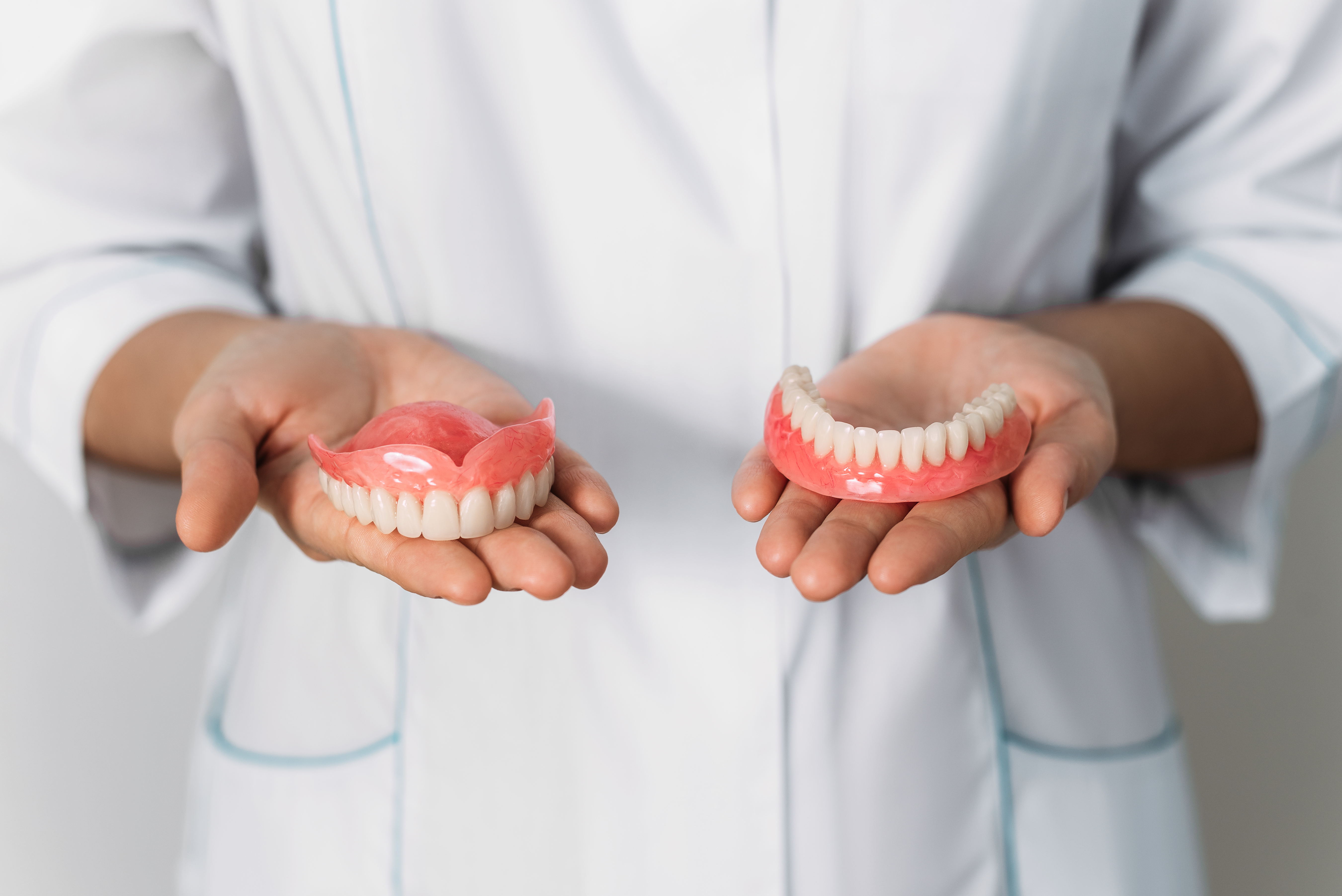
The number of implants a patient can accommodate — both biologically and financially — plays a significant role in the decision. A fixed full arch prosthesis requires six implants per arch. A removable implant denture can function well with as few as three implants in the lower jaw or four in the upper.
Dr. Kriston presents options honestly at every budget level and recommends the minimum number of implants needed for a stable, successful result:
Lower removable denture: three implants at minimum, ideally four. The difference between two and three implants is dramatic — think of the difference between a two-legged stool and a three-legged stool. Two implants can hold a denture in place, but three provide the triangulation that makes it truly stable. Four implants provide even greater security.
Upper removable denture: four implants ideally. With four implants, you have anterior and posterior, left and right coverage for retention purposes — the denture is anchored at all four corners.
Fixed prosthesis (hybrid or zirconia): six implants per arch. A fixed prosthesis bears all chewing forces directly through the implants into the bone. Six implants distribute those forces across a wider area, reducing the load on any single implant and improving long-term success.
These are minimums. When bone factors or the demands of a particular patient’s chewing warrant it, Dr. Kriston may recommend additional implants for even a removable denture. The goal is always a result that is stable, durable, and designed to last.
The two-stage nature of implant treatment also divides costs over time, making the investment more manageable than patients often expect.
A removable implant denture must be taken out for cleaning, and the implant attachments require maintenance. For older patients with arthritis, limited hand strength, or reduced fine motor control, inserting and removing the denture and cleaning around the attachments can be challenging.
A fixed prosthesis stays in the mouth permanently — the patient never removes it. However, cleaning underneath a fixed full arch prosthesis requires special tools (water flossers, interdental brushes) and good technique. Dr. Kriston evaluates each patient’s ability to maintain either type and factors this into the recommendation.
There is no wrong answer here — only the answer that’s right for the individual patient’s life, capabilities, and preferences.

A hybrid denture consists of a metal bar framework that attaches to the implants, covered by acrylic (the same material as a conventional denture) with acrylic teeth set into it. The metal bar provides structural strength while the acrylic provides the visible tooth and gum-colored surfaces.
Hybrid dentures are a proven, effective solution and are often more affordable than zirconia alternatives. Like zirconia, a hybrid denture is best supported by six implants per arch for proper force distribution. However, they do have a limitation: in patients who clench or grind, the acrylic teeth can chip or break, and the acrylic base can fracture under heavy forces. Repairs are possible but can be frequent in patients with significant bruxism.
For patients with moderate bite forces who don’t clench or grind heavily, a hybrid denture provides excellent function and a natural appearance at a more accessible price point.
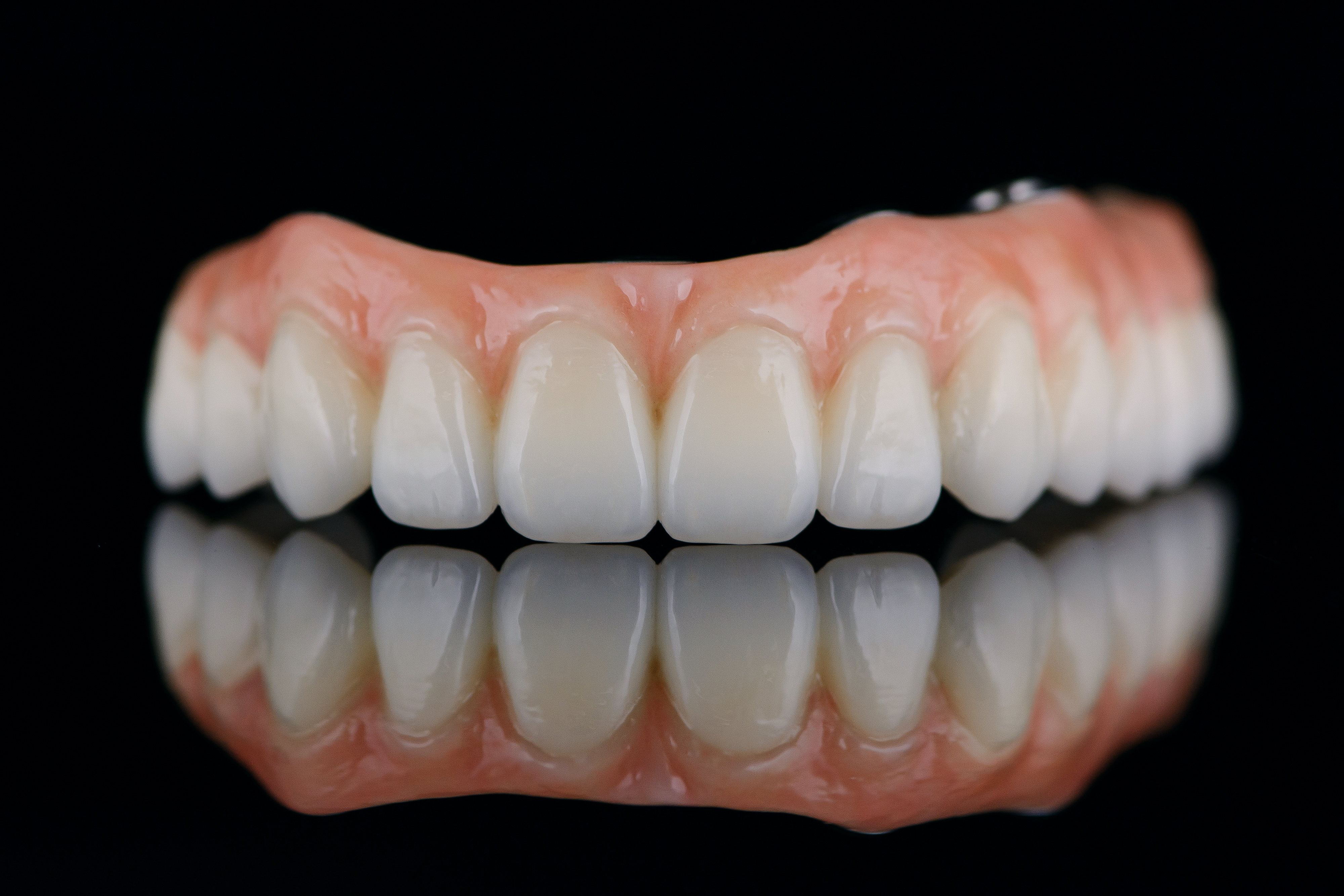
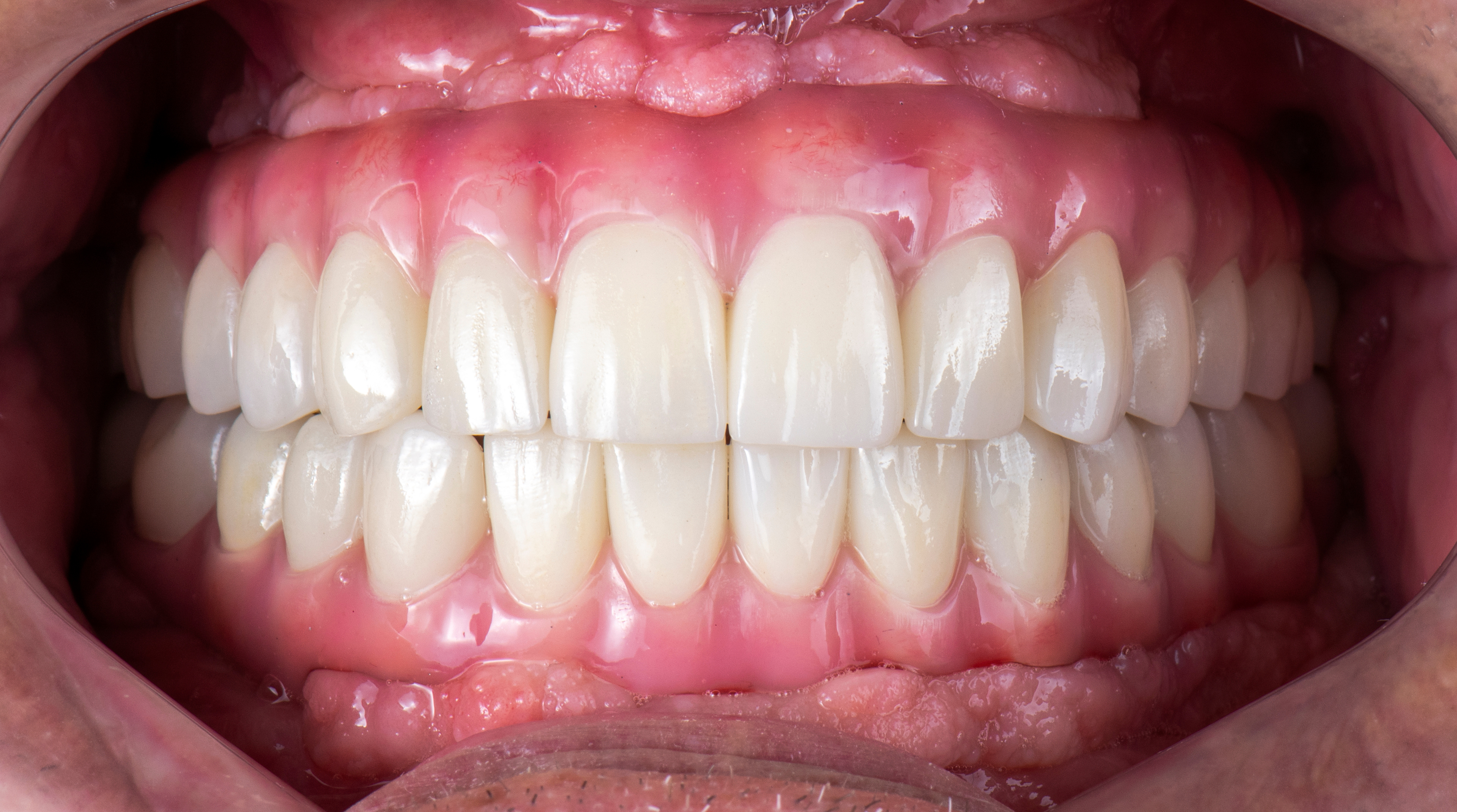
A zirconia full arch prosthesis is milled from a solid block of zirconia ceramic — one of the strongest dental materials available. It attaches to the implants the same way as a hybrid (screw-retained), but the material itself is dramatically different.
Zirconia offers two major advantages over a hybrid denture:
Strength. Zirconia is far more resistant to chipping, cracking, and fracture than acrylic. For patients who clench or grind, or who oppose natural teeth generating strong bite forces, zirconia provides the durability needed for long-term success without the frequent repair risk of acrylic. However, zirconia’s hardness has an important engineering implication: because the material absorbs very little of the chewing force, those forces are translated directly down into the implants and then into the bone. This is why Dr. Kriston recommends a minimum of six implants for a zirconia full arch — the forces must be distributed across enough implants to prevent overloading any single site.
Aesthetics. Zirconia has the ability to reflect light in ways that closely mimic natural enamel, giving the prosthesis a lifelike quality that acrylic cannot match. The surface can be characterized with natural tooth shading, translucency, and texture that makes the result virtually indistinguishable from natural teeth.
As discussed on our Implant Restorations page, Dr. Kriston typically designs the zirconia prosthesis after a PMMA provisional has been worn and approved — verifying esthetics, phonetics, occlusal design, and TMJ comfort before the final zirconia is milled. By the time the permanent prosthesis is delivered, it’s an exact replication of a design that has already been tested and approved.
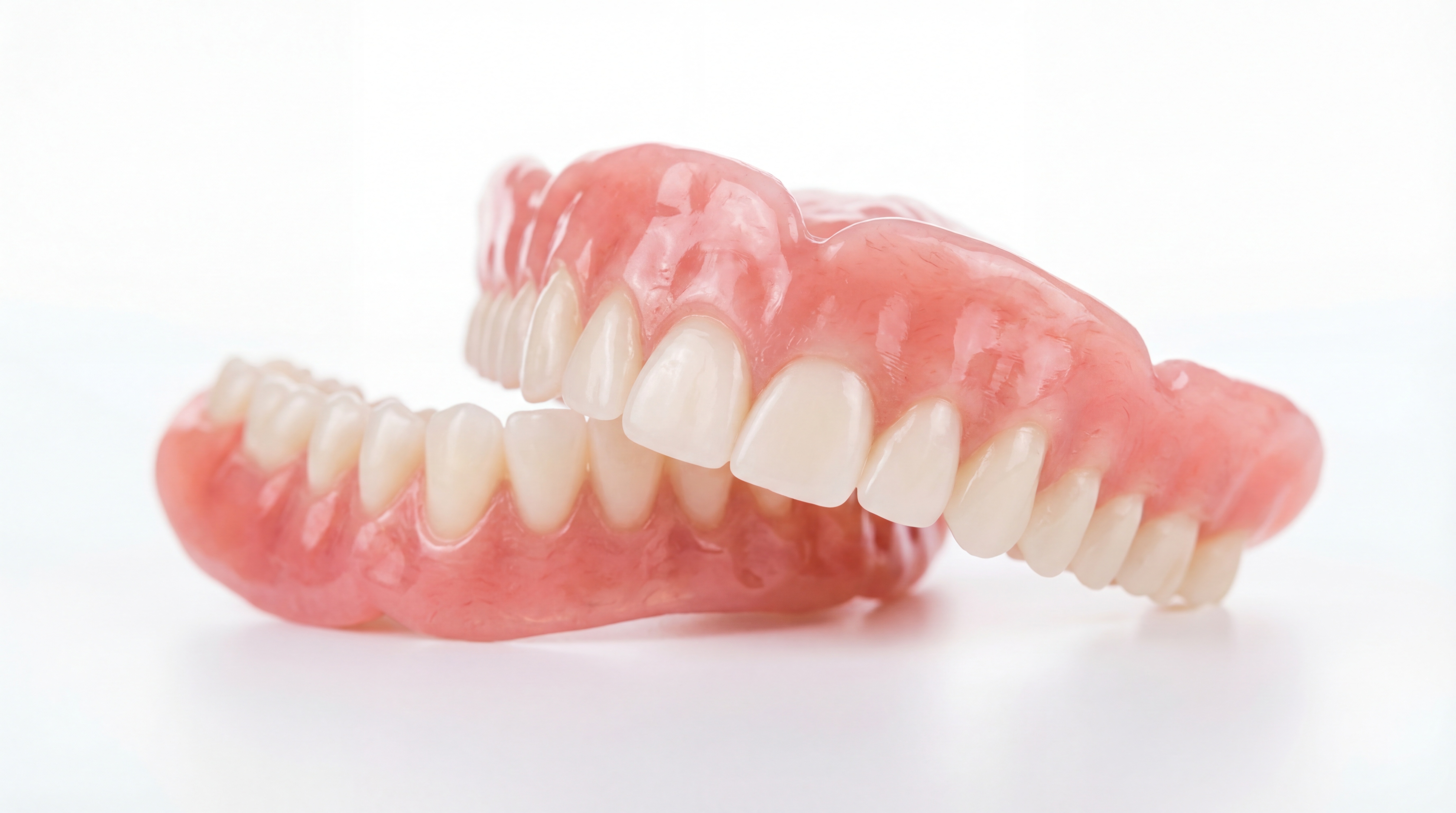
A removable implant-supported denture clips onto the implants for stability during eating and speaking, but can be taken out by the patient for cleaning. This design offers dramatically better retention and confidence than a conventional denture while requiring fewer implants than a fixed prosthesis.
As described on our Implant Restorations page, removable implant dentures fall into two categories:
RP-4 (implant-supported only) — the denture is entirely supported by the implants and does not rest on the gums. This provides the most stable removable result.
RP-5 (implant and tissue supported) — the denture is supported by both the implants and the gum tissue. The implants provide retention (keeping it from moving), while the tissue helps distribute some chewing forces. This design requires fewer implants, making it more affordable.
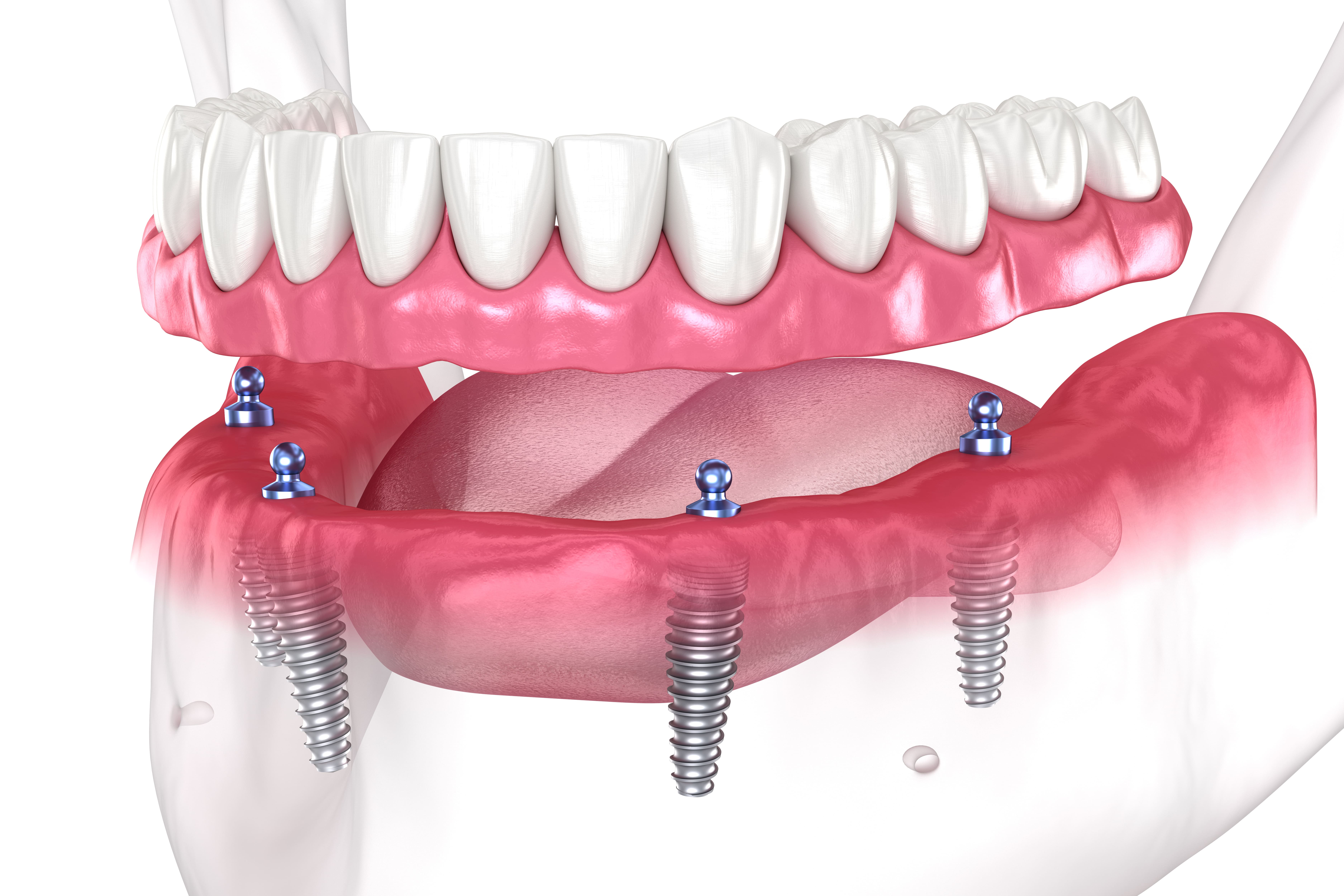
The attachment is the mechanism that holds the removable denture to the implants. There are two main types:
The simplest attachment design: a ball-shaped abutment screws onto the top of each implant, and a corresponding socket inside the denture snaps onto the ball. Ball and socket attachments are effective and straightforward, but offer fewer options for adjusting retention strength over time.
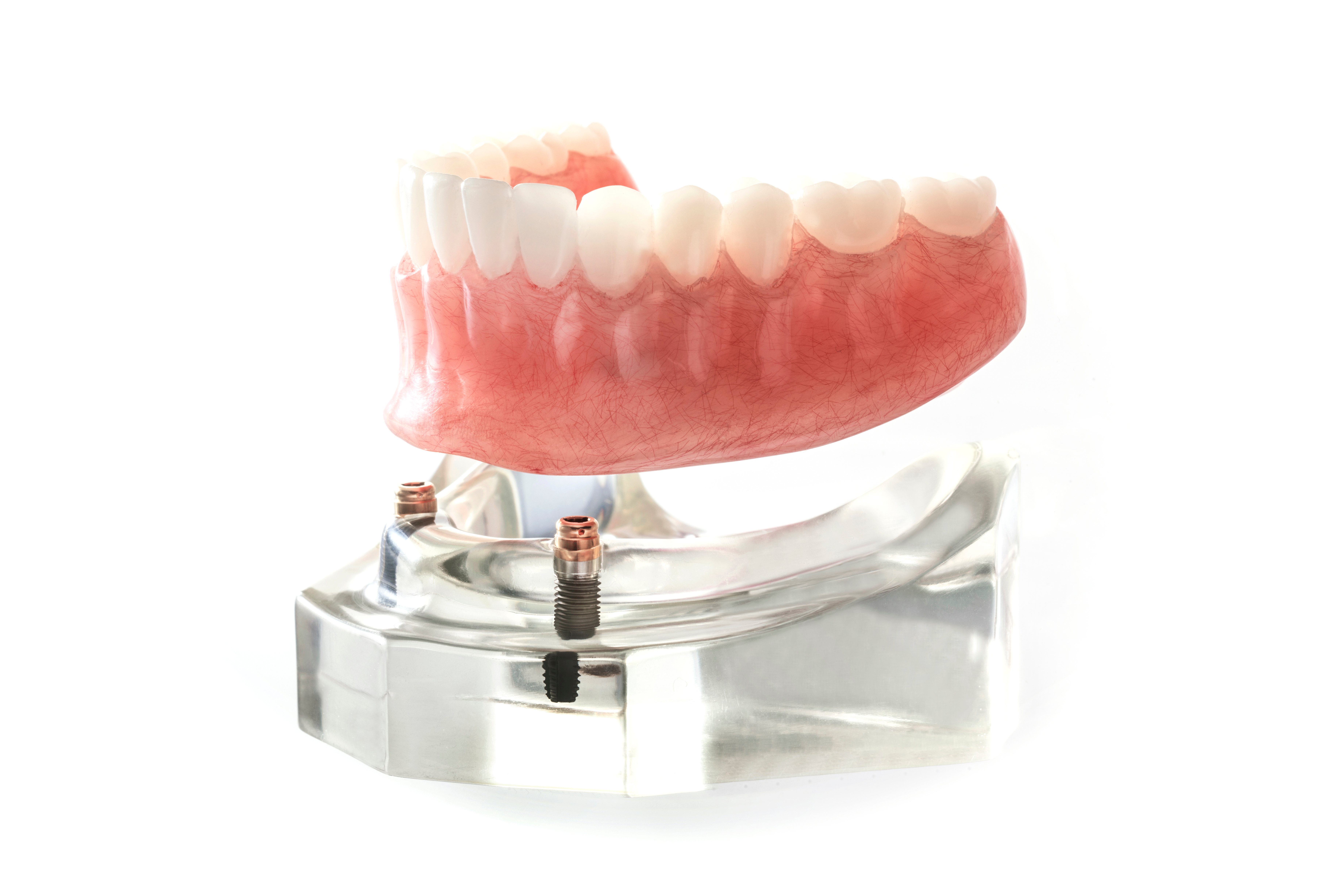
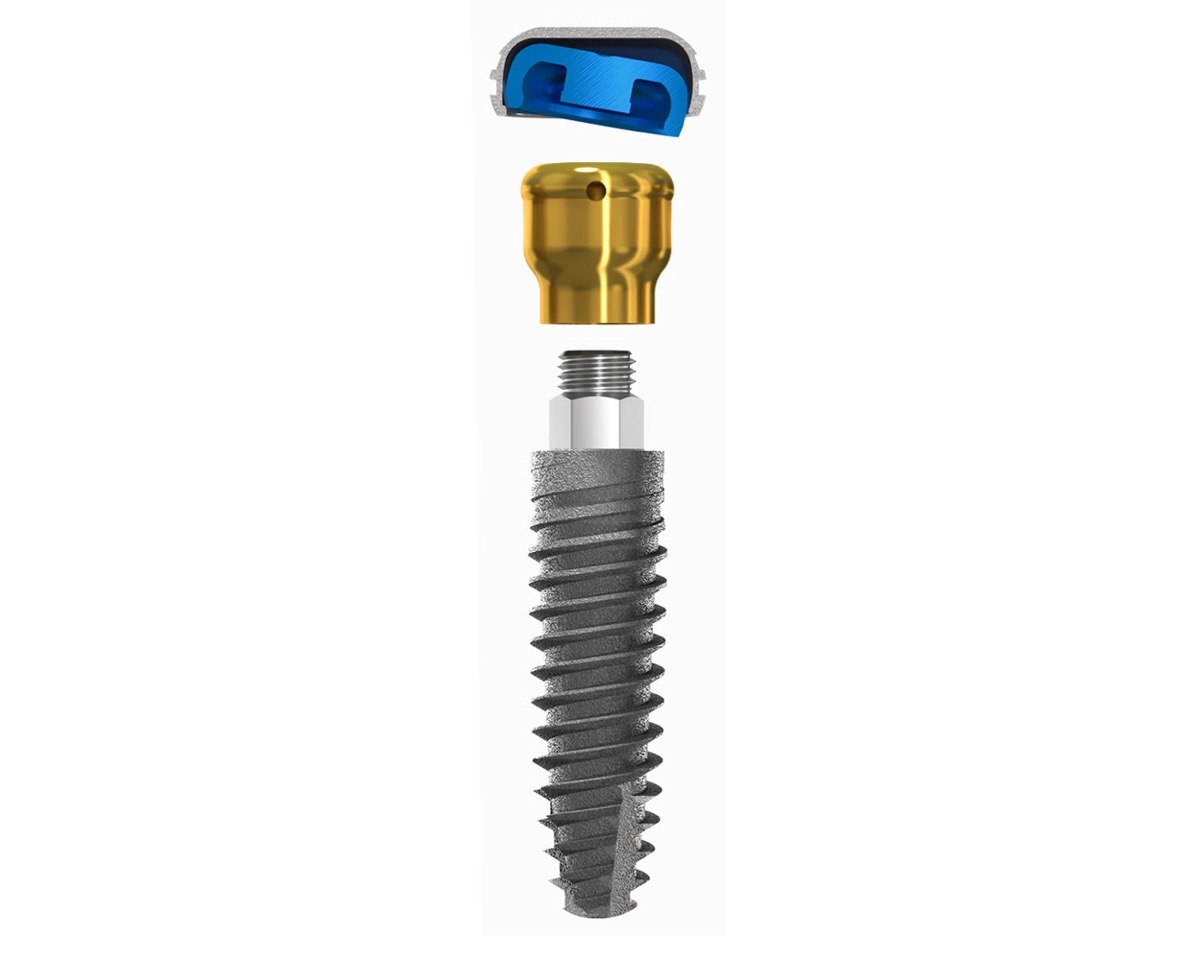
Dr. Kriston recommends the Locator attachment system for most removable implant denture cases, and here’s why.
The Locator system uses a smooth, low-profile cylinder abutment that is torqued down onto the implant. This abutment is not removable by the patient — it stays permanently on the implant. Inside the denture, a corresponding metal housing holds a replaceable nylon retention insert that interlocks with the cylinder head on the implant.
What makes the Locator system superior is the variety of retention inserts available. These nylon cup-like inserts come in different strengths — from light retention to strong retention — and can be swapped easily during a routine office visit. This means Dr. Kriston can adjust how firmly the denture holds to the implants as the patient’s needs change over time.
Another significant advantage is the housing options. The Locator system offers two types of metal housings that hold the nylon inserts:
Fixed housing. A rigid connection that provides maximum stability. Ideal when implants are parallel or near-parallel to each other.
Pivoting housing. A housing with a pivoting action that allows greater flexibility of fit. This is particularly valuable when implants needed to be placed at an angle to take advantage of the best available bone. The pivoting housing compensates for the angulation, allowing the denture to seat smoothly even when implant angles aren’t perfectly parallel.
This flexibility in both retention strength and housing design is why Dr. Kriston prefers the Locator system — it adapts to the patient’s anatomy and can be fine-tuned over time as conditions change.
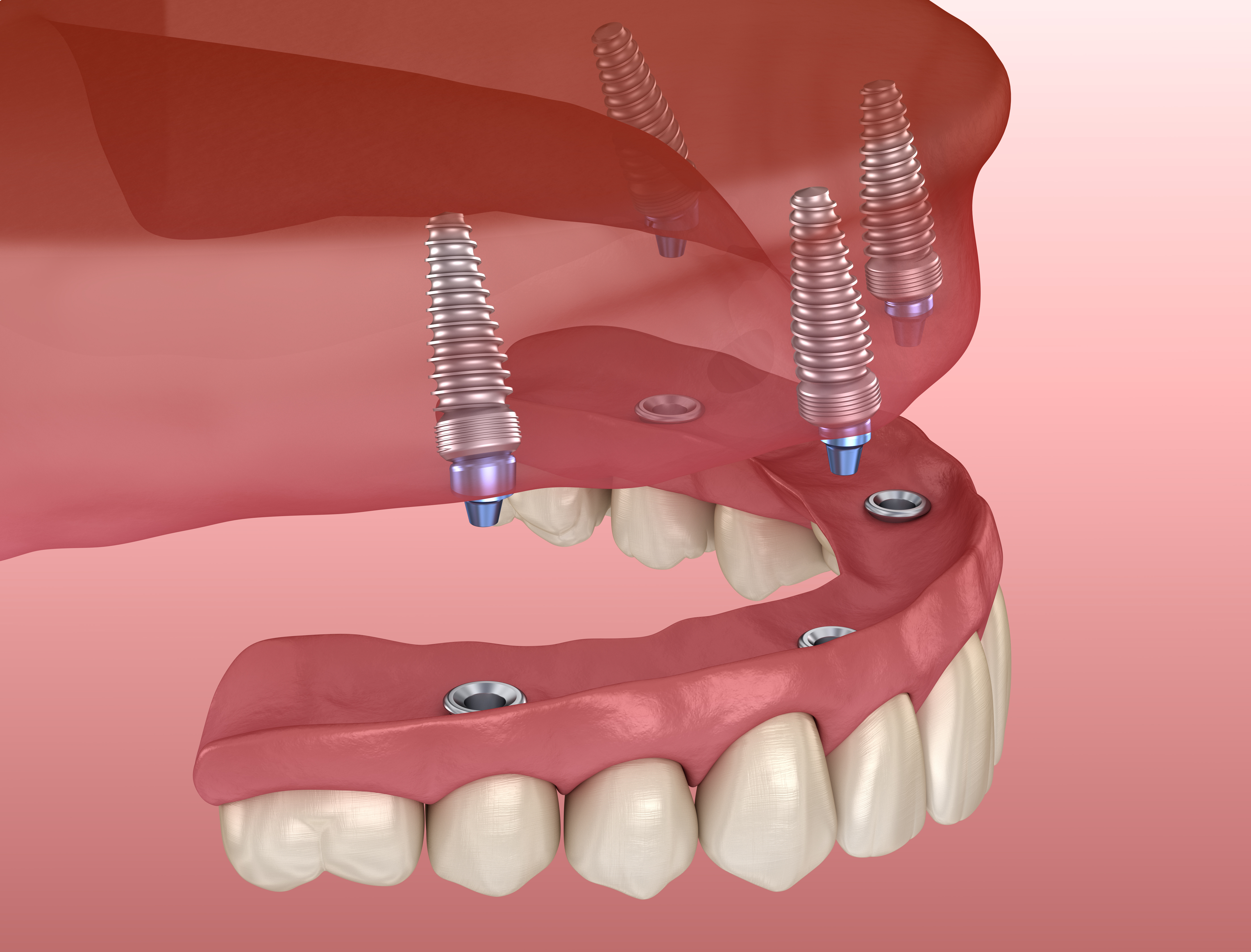
You may have heard the terms “All-on-4” or “All-on-6.” These refer to the concept of supporting a full arch of replacement teeth on four or six strategically placed implants.
The All-on-4 approach was developed to maximize the use of available bone, particularly in patients who have experienced significant bone loss in the back of the jaw. By angling the rear implants to engage denser bone further forward, a full arch of teeth can be supported without the need for bone grafting in the posterior region.
All-on-6 uses six implants for additional support, which may be recommended when bone quality permits and the patient’s bite forces (particularly if opposing natural teeth) demand the extra anchoring.
Whether an All-on-4 or All-on-6 approach is appropriate depends on the same factors described above: bone density and volume, opposing arch forces, and the type of prosthesis (hybrid vs. zirconia). Dr. Kriston evaluates each case with 3D CBCT imaging and determines the optimal number and positioning of implants for your specific anatomy.
While implant-supported dentures feel remarkably secure and natural, there is one fundamental difference between implants and natural teeth that every patient should understand: proprioception.
Proprioception is the feedback loop between each natural tooth and your brain. Every natural tooth has nerve fibers in the ligament that surrounds it, constantly sensing the force being applied. When you bite down on something too hard, your brain registers the pressure instantly and adjusts your muscles to protect the tooth. This happens unconsciously, hundreds of times per meal.
Dental implants don’t have this feedback loop. An implant is fused directly to the bone with no ligament and no nerve fibers providing force feedback. This means you could be applying three times the normal force on an implant crown, bridge, or denture and be completely unaware of it.
This is one of the most important reasons why material selection, opposing arch analysis, and occlusal design matter so much in implant-supported dentures. Without proprioception, the materials must be strong enough to withstand forces that the patient can’t feel, and the bite must be designed to distribute those forces safely. It’s also why Dr. Kriston pays careful attention to what’s opposing the implant denture — natural teeth generate powerful forces, and if those forces aren’t managed properly in the design, materials can break without the patient ever feeling the load that caused it.
This understanding of proprioception informs every decision Dr. Kriston makes about implant number, material selection, and bite engineering in full arch cases.
If you’ve been wearing a conventional denture for years, you are still a candidate for implants. Many patients assume that years of bone loss from wearing a denture have disqualified them — but that’s often not the case.
Bone does shrink when teeth are missing, and the longer the teeth have been gone, the more resorption has occurred. But there are techniques and materials to add new bone where it’s needed. And in many cases, enough bone remains — particularly in the front of the lower jaw — to support three to four implants that can transform a loose, frustrating conventional denture into a stable, confident implant-supported one.
One important recommendation: Dr. Kriston typically advises having a new denture fabricated once the implants are fully healed, with the Locator attachments integrated into the new denture from the start. Trying to retrofit attachments into an old denture is less predictable — the fit, the occlusion, and the attachment alignment all benefit from building the denture around the implant positions rather than adapting an old prosthesis to new anchoring points.
Many patients who make this transition wish they had done it years ago. The difference between a denture that shifts, clicks, and limits your diet and a denture that locks firmly into place and lets you eat, speak, and laugh without worry is genuinely life-changing.

.svg)
By far the best dentist I’ve had! Extremely thoughtful in his work, taking time to explain the reasoning behind decisions and will even show you the details of what is going on with your teeth through a micro camera. I had a few significant issues with my teeth, and Michael was the first of four dentists I had seen to provide a thoughtful long term solution in the least invasive way possible. He is truly concerned with the health and function of your teeth and gums, and is extremely skilled to implement great solutions. Would highly recommend.
I had my first visit with Dr. Kriston and had the best experience in a dental office, by far. I was looking for a dentist to revamp my smile and a friend recommended Dr. Kriston. Dr. Kriston spent a lot of time listening to my vision and together we came up with a plan for my smile that I'm very happy with. Everyone in the office was friendly, helpful and welcoming. My bar was set high and Dr. Kriston went well above it with his knowledge, recommendations and real understanding of my situation.
The office is beautiful, modern and spotless. They have relaxing music playing throughout that right away made me feel calm. The front receptionist is very attentive and supportive; she answered all my questions and clearly explained the cost and my insurance. I qualified for an interest free payment plan and was able to afford my dream smile.
I just had to write this review because I'm so happy I found Dr. Kriston. I've been self conscious about my teeth for years and I just couldn't find a dentist I felt this good about. I highly recommend Dr. Kriston.
Clean, professional, and easy to use. Velora gave my agency the polished online presence it needed."
Clean, professional, and easy to use. Velora gave my agency the polished online presence it needed."
Clean, professional, and easy to use. Velora gave my agency the polished online presence it needed."
Clean, professional, and easy to use. Velora gave my agency the polished online presence it needed."
By far the best dentist I’ve had! Extremely thoughtful in his work, taking time to explain the reasoning behind decisions and will even show you the details of what is going on with your teeth through a micro camera. I had a few significant issues with my teeth, and Michael was the first of four dentists I had seen to provide a thoughtful long term solution in the least invasive way possible. He is truly concerned with the health and function of your teeth and gums, and is extremely skilled to implement great solutions. Would highly recommend.
I had my first visit with Dr. Kriston and had the best experience in a dental office, by far. I was looking for a dentist to revamp my smile and a friend recommended Dr. Kriston. Dr. Kriston spent a lot of time listening to my vision and together we came up with a plan for my smile that I'm very happy with. Everyone in the office was friendly, helpful and welcoming. My bar was set high and Dr. Kriston went well above it with his knowledge, recommendations and real understanding of my situation.
The office is beautiful, modern and spotless. They have relaxing music playing throughout that right away made me feel calm. The front receptionist is very attentive and supportive; she answered all my questions and clearly explained the cost and my insurance. I qualified for an interest free payment plan and was able to afford my dream smile.
I just had to write this review because I'm so happy I found Dr. Kriston. I've been self conscious about my teeth for years and I just couldn't find a dentist I felt this good about. I highly recommend Dr. Kriston.
By far the best dentist I’ve had! Extremely thoughtful in his work, taking time to explain the reasoning behind decisions and will even show you the details of what is going on with your teeth through a micro camera. I had a few significant issues with my teeth, and Michael was the first of four dentists I had seen to provide a thoughtful long term solution in the least invasive way possible. He is truly concerned with the health and function of your teeth and gums, and is extremely skilled to implement great solutions. Would highly recommend.
I had my first visit with Dr. Kriston and had the best experience in a dental office, by far. I was looking for a dentist to revamp my smile and a friend recommended Dr. Kriston. Dr. Kriston spent a lot of time listening to my vision and together we came up with a plan for my smile that I'm very happy with. Everyone in the office was friendly, helpful and welcoming. My bar was set high and Dr. Kriston went well above it with his knowledge, recommendations and real understanding of my situation.
The office is beautiful, modern and spotless. They have relaxing music playing throughout that right away made me feel calm. The front receptionist is very attentive and supportive; she answered all my questions and clearly explained the cost and my insurance. I qualified for an interest free payment plan and was able to afford my dream smile.
I just had to write this review because I'm so happy I found Dr. Kriston. I've been self conscious about my teeth for years and I just couldn't find a dentist I felt this good about. I highly recommend Dr. Kriston.
By far the best dentist I’ve had! Extremely thoughtful in his work, taking time to explain the reasoning behind decisions and will even show you the details of what is going on with your teeth through a micro camera. I had a few significant issues with my teeth, and Michael was the first of four dentists I had seen to provide a thoughtful long term solution in the least invasive way possible. He is truly concerned with the health and function of your teeth and gums, and is extremely skilled to implement great solutions. Would highly recommend.
I had my first visit with Dr. Kriston and had the best experience in a dental office, by far. I was looking for a dentist to revamp my smile and a friend recommended Dr. Kriston. Dr. Kriston spent a lot of time listening to my vision and together we came up with a plan for my smile that I'm very happy with. Everyone in the office was friendly, helpful and welcoming. My bar was set high and Dr. Kriston went well above it with his knowledge, recommendations and real understanding of my situation.
The office is beautiful, modern and spotless. They have relaxing music playing throughout that right away made me feel calm. The front receptionist is very attentive and supportive; she answered all my questions and clearly explained the cost and my insurance. I qualified for an interest free payment plan and was able to afford my dream smile.
I just had to write this review because I'm so happy I found Dr. Kriston. I've been self conscious about my teeth for years and I just couldn't find a dentist I felt this good about. I highly recommend Dr. Kriston.
.jpeg)