
Schedule Your Free Consultation

No one wants to hear they need a tooth extracted. And Dr. Kriston would always prefer to save a tooth if possible. But when extraction is the right decision, how it’s done matters enormously — not just for your comfort today, but for your options tomorrow.

At Michael Kriston DDS in Danville, every extraction is performed with an atraumatic technique designed to preserve as much bone as possible around the tooth being removed. This bone preservation directly determines what’s possible afterward — whether a dental implant can be placed, what type of restoration the site can support, and how your smile will look long-term.

An extraction isn’t the end of the story. It’s often the beginning of a new one. And Dr. Kriston approaches every extraction with that future in mind.

Contact

What “Atraumatic” Extraction Actually Means

Atraumatic means preserving as much of the surrounding bone as possible during the removal of a tooth. This may sound obvious, but traditional extraction techniques can be surprisingly damaging to the bone — cracking socket walls, compressing the bony ridge, or fracturing the thin buccal plate (the bone on the cheek side of the tooth) that is essential for both implant placement and cosmetic outcomes.

Dr. Kriston uses specialized instruments to minimize this damage:

Periotomes.
Thin, delicate instruments that slide between the tooth root and the surrounding bone, gently severing the ligament fibers that hold the tooth in place. By releasing the tooth from its ligament first, the root can be lifted out with minimal force on the bone.

Physics forceps. Extraction forceps designed to use mechanical advantage rather than brute force. They rotate the tooth out of the socket using a controlled, steady pressure that preserves the socket walls rather than crushing them.

Root sectioning. For multi-rooted posterior teeth (molars and premolars), Dr. Kriston separates the roots into individual pieces before removing them. Each single root can then be lifted out of its own socket pathway with far less force than trying to extract the entire tooth as one unit. This is one of the most important atraumatic techniques for back teeth.

These techniques are particularly important when the coronal portion (the visible crown) of the tooth has been lost to decay or fracture, leaving only a root with very little to grasp. Specialized instruments allow Dr. Kriston to remove even a solitary root while preserving the surrounding bone.

Why Bone Preservation Matters

Every millimeter of bone preserved during an extraction has consequences that extend months and years into the future:

For implant success. A dental implant needs adequate bone volume and density to integrate successfully. Bone lost during extraction is bone that must either be rebuilt through grafting (which takes months) or that permanently reduces your implant options.

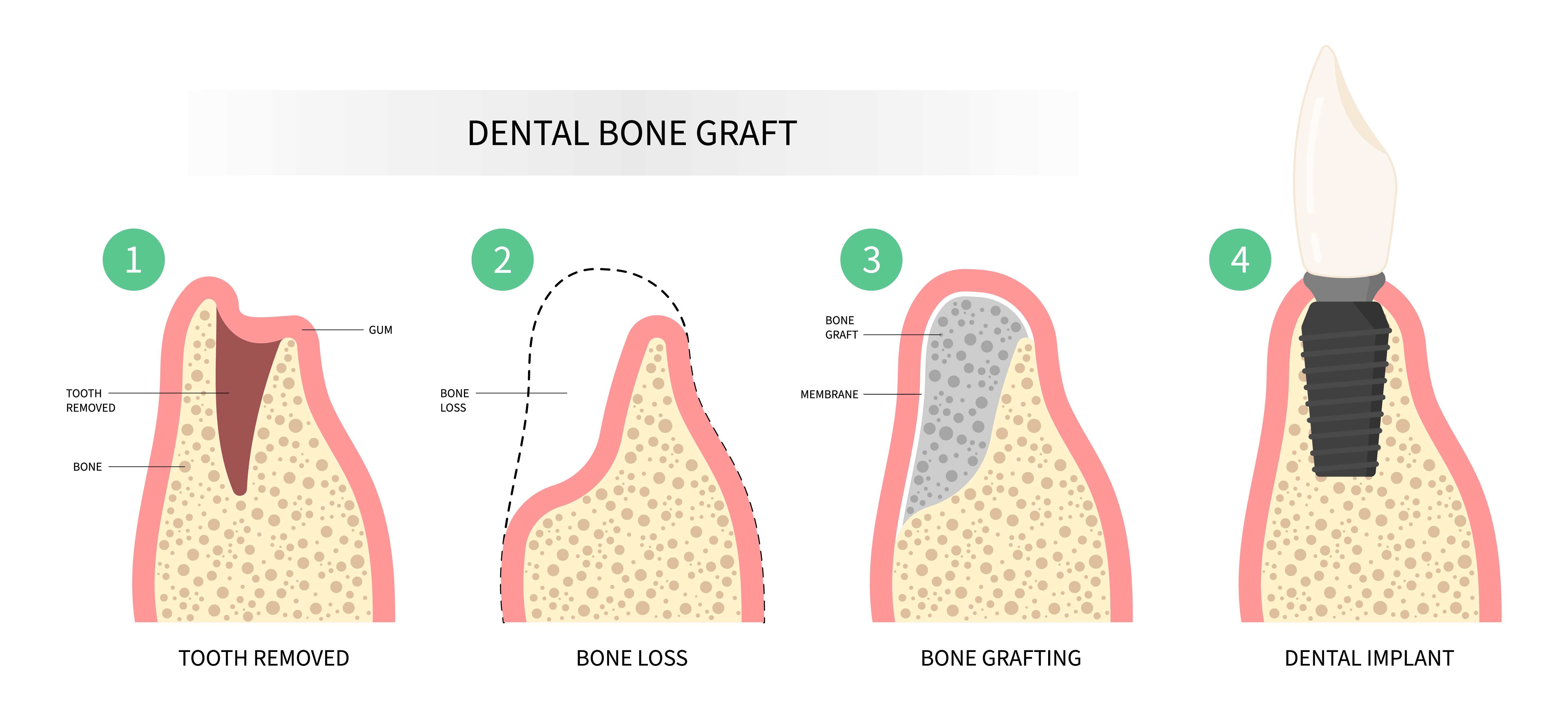
For graft success. When bone graft material is placed in the socket after extraction, the more intact walls of bone surrounding the graft, the better. Each wall provides blood supply and bone-building cells that help the graft material convert into new living bone. A socket with four intact walls heals more predictably than one where walls have been fractured during extraction.

For cosmetics. In the upper front teeth — the esthetic zone — the buccal plate is naturally very thin. Sometimes it already has defects: a dehiscence (bone missing from the top) or a fenestration (a hole partway down). Preserving what remains is critical for the cosmetic outcome of any future restoration. Losing the buccal plate can mean the difference between an FP-1 restoration (a natural-looking crown emerging from healthy gums) and an FP-3 (a restoration that needs pink material to compensate for missing tissue).

For healing. Beyond the long-term implications, an atraumatic extraction simply heals better. Less bone damage means less swelling, less pain, and faster recovery.

Save or Extract? — An Honest Conversation

Dr. Kriston would always prefer to save a tooth. Even the best dental implants carry a roughly 5% failure rate, and if an implant fails, the success rate of attempting a second implant in that same site drops substantially. A natural tooth — even a compromised one — is still a natural tooth, with its own root, its own ligament, and its own proprioceptive feedback to the brain.

But sometimes saving a tooth isn’t the best investment. Here’s how Dr. Kriston evaluates the decision:

What It Would Take to Save It

Dr. Kriston lays out every step that would be required: root canal, post, buildup, crown lengthening if needed, and the final crown. He explains each procedure, the time involved, and the cost. Patients deserve to understand the full scope before making a decision.

The Prognosis

How long will the saved tooth realistically last? If it’s a heroics situation — saving a badly compromised root — Dr. Kriston gives patients a range. He can’t predict with certainty, but he can estimate based on the condition of the tooth, the environment it’s in, and his experience with similar cases.

Key factors that affect prognosis:

  • Is the patient a bruxer or clencher? Teeth that have had root canals become more brittle with age and can eventually split or crack under grinding forces
  • How much remaining tooth structure is there? More structure means more support for the restoration
  • What is the periodontal condition? Compromised bone support reduces the tooth’s longevity
  • Where is the fracture line? A crack just a couple of millimeters below the bone level, affecting only a small area of the circumference, may be savable with crown lengthening. A fracture well below the bone — in the middle third of the root, or involving a large portion of the circumference — typically means removal is the better choice

The Cost-Benefit Analysis

If saving the tooth requires a root canal, post, buildup, crown lengthening, and crown — and the expected service life is only a few years — the question becomes: is that money better invested in a longer-lasting replacement?

Dr. Kriston presents both options with honest costs and realistic timelines. He’ll tell you what he would do if it were his own tooth or a family member’s tooth. But he also listens to what the patient feels about losing a tooth. For some, it’s not a big deal. For others, it can be psychologically difficult. That matters too, and it factors into the recommendation.

Ultimately, the patient decides — but they decide with all the facts, not with guesswork.

When a Tooth Cannot Be Saved

Some situations make extraction the clear recommendation:
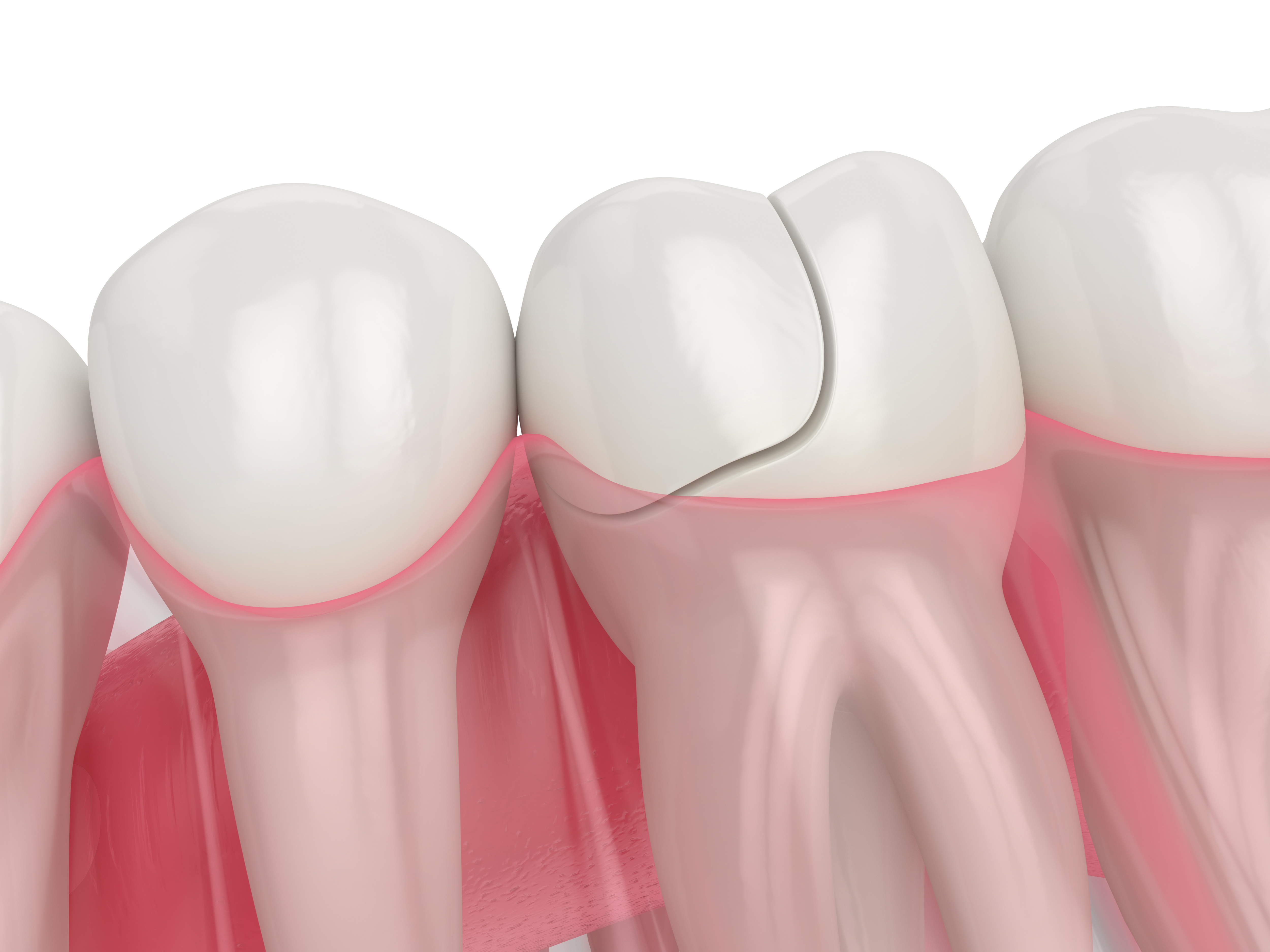
  • The fracture extends well below the bone level, and removing enough bone to restore it would undermine the tooth’s support — making it mobile and unstable
  • In the lower anterior teeth, which are single-rooted and very thin, removing bone to expose a fracture would leave almost no support
  • The infection is so extensive that the surrounding bone is severely compromised
  • The tooth has vertical root fracture — a crack running along the length of the root that cannot be restored
  • The cost of saving the tooth far exceeds the cost and longevity of replacing it with an implant or bridge

Crown Lengthening — Saving a Tooth That Broke Below the Bone

When a tooth breaks off at or just below the gum line, it often looks unsavable. But in many cases, Dr. Kriston can perform a crown lengthening procedure — a minor surgical procedure that lowers the bone level around the broken area to expose healthy root surface that a restoration can attach to.

The principle is straightforward: a crown, onlay, or veneer needs a continuous seal against solid tooth structure all the way around its perimeter. It can’t hang in air with a gap where bacteria can enter. Crown lengthening creates the surface the restoration needs by exposing root structure that was previously buried in bone.

This is viable when the fracture is just a couple of millimeters below the bone, affecting only a small area of the tooth’s circumference. When the fracture is deeper or more extensive, the amount of bone that would need to be removed could undermine the tooth’s support entirely — making extraction the better option.

Dr. Kriston performs crown lengthening in his office. He has done these surgical procedures throughout his career and evaluates each case with 3D CBCT imaging to determine whether crown lengthening will provide a stable, long-lasting result or whether the tooth is better replaced.

What We Extract In Our Office

Dr. Kriston performs a wide range of extractions in his office, including:

  • Simple extractions of single-rooted and multi-rooted teeth
  • Surgical extractions requiring sectioning of roots, bone removal between roots, or flap procedures
  • Removal of retained roots where the crown has been lost to decay or fracture
  • Many wisdom teeth extractions
  • Extractions with immediate bone grafting and socket preservation
  • Extractions with same-day implant placement when conditions allow

For patients who are medically compromised, or when teeth are positioned near vital anatomical structures like the inferior alveolar nerve or the maxillary sinus, Dr. Kriston refers to a trusted oral surgery specialist. Patient safety always comes first, and knowing when to refer is as important as knowing how to extract.
What Happens After the Extraction

Bone Grafting

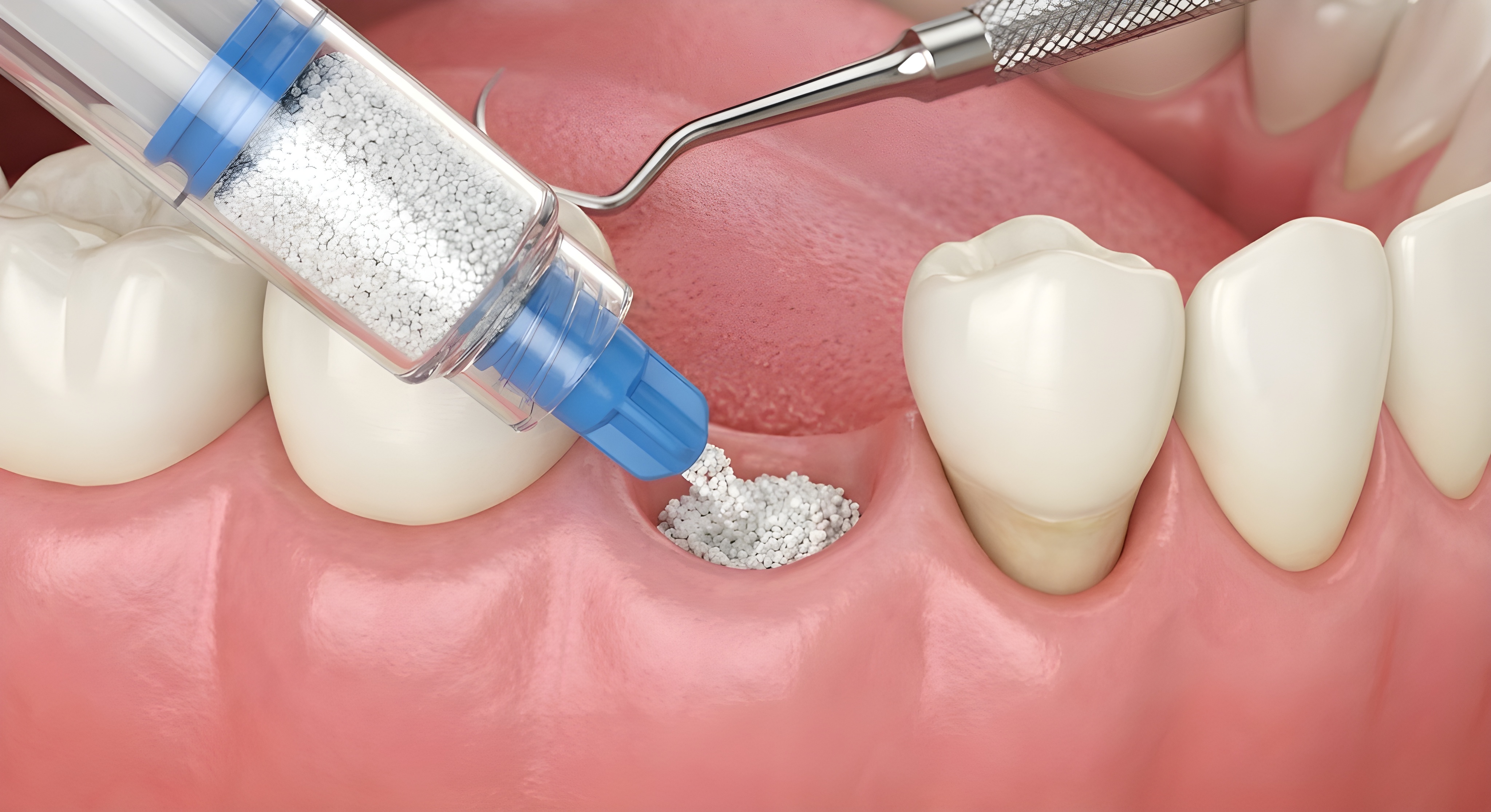
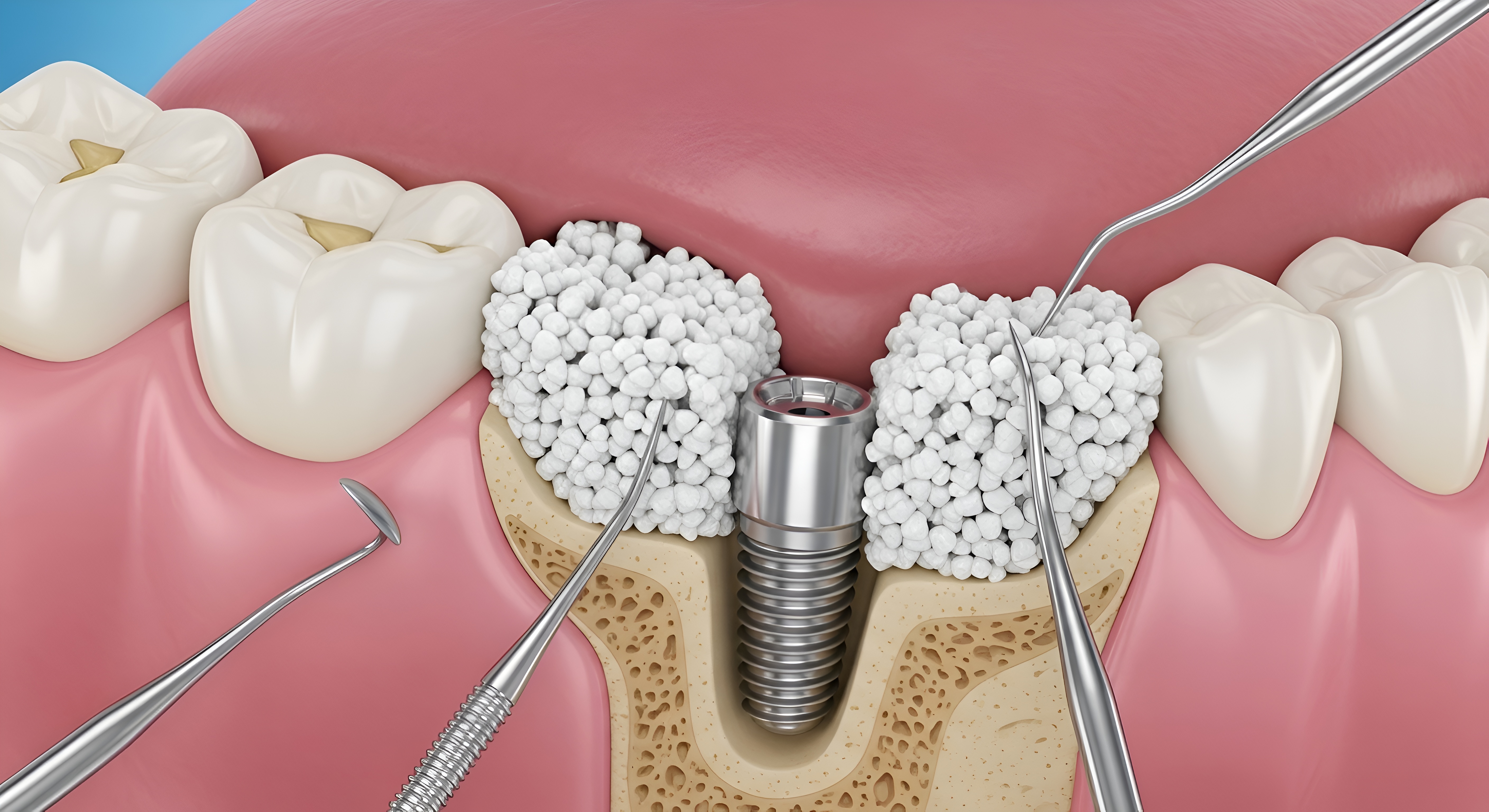
Dr. Kriston grafts the socket at the time of extraction in nearly every case. The exception, as described on our Bone Grafting page, is when active infection is so extensive that it would jeopardize the graft’s ability to heal. In those cases, the infection is addressed first, and grafting is done at a later stage when conditions support success.

Same-Day Implant Placement

When the extraction site is free of infection and the bone quality is adequate, a dental implant can sometimes be placed into the socket on the same day the tooth is removed. The key requirement is primary stability — the implant must engage at least 3 millimeters of good, dense bone to achieve the initial mechanical hold that allows osseointegration to begin.

Same-day placement is not possible in infected bone or in bone that is too porous to achieve primary stability. Jawbone varies in density — there are four classifications of bone density, and the densest bone provides the best conditions for immediate implant placement. Dr. Kriston evaluates bone density and quality with 3D CBCT imaging before making the determination.

When same-day placement isn’t appropriate, the socket is grafted and allowed to heal for three to six months, after which the implant is placed into mature, healthy bone.


Recovery

Recovery from an atraumatic extraction is often easier than patients expect. Because the technique preserves bone and minimizes tissue trauma, swelling is often minimal and healing is faster than with conventional extraction methods.

Dr. Kriston’s post-operative recommendations are specific and time-sensitive:

Pain management. The single most important instruction: take the first dose of pain reliever BEFORE the anesthetic wears off. Dr. Kriston often provides this first dose in the office. He recommends a specific over-the-counter medication combination that provides relief comparable to narcotics without the downsides of narcotic medications.

Cold compress. Application of cold compress is most effective in the first 24 hours. After that first day, the window for controlling swelling has passed. Dr. Kriston prescribes a specific application technique that works extremely well when followed consistently in the first day.

Activity and rest. The first 24 hours should be low stress and low activity. This is not the time to run a marathon. Traveling by air is also not recommended immediately after extraction — the change in cabin pressure can cause complications at the extraction site.

Medications. Any antibiotics or other prescribed medications should be taken exactly as directed. Completing the full course of antibiotics is essential to prevent infection.

Smoking. Smokers face the highest risk of complications, particularly dry socket — a painful condition where the blood clot is lost from the extraction site. Dr. Kriston strongly advises against smoking during the healing period.

If You’ve Been Putting Off an Extraction

Dr. Kriston sees it regularly: a patient who has known for months, sometimes years, that a tooth needs to come out, but has avoided it because of fear.

Often, these patients feel embarrassed. They know they’ve let the situation go too long. They worry about being judged.

Dr. Kriston wants you to know: there is nothing to be embarrassed about. This is an incredibly common situation, and he sees people in similar circumstances regularly. Everyone has different fears — for some it’s the needle, for some it’s the sound of the handpiece, for some it’s simply the idea of losing a tooth. Whatever the fear, acknowledging it is the first step to moving past it.

Dr. Kriston’s approach is to explain exactly what to expect — step by step, before anything happens. Knowing what’s coming eliminates the fear of the unknown, which is often the biggest fear of all. And when he knows what specifically bothers a patient, he can take steps to address it: positioning so you don’t see the needle, using techniques that minimize the sound, talking you through each step so nothing is a surprise.

For patients who want an even more relaxed experience, oral conscious sedation is available. Many patients who have been avoiding the dentist for years find that one sedated appointment breaks the cycle of fear entirely.

The Extraction as the First Step

An extraction is rarely an isolated event. It’s the first step in a sequence that leads to replacing the missing tooth and restoring your smile:

  1. Atraumatic extraction preserving maximum bone
  2. Bone grafting to maintain the ridge for future restoration
  3. Healing period (3–6 months for the graft to mature)
  4. Implant placement into healthy, mature bone
  5. Implant integration (2–3 months)
  6. Final restoration — a crown, bridge, or prosthesis designed by Dr. Kriston to match your natural teeth

When same-day implant placement is possible, steps 2 through 4 are compressed into a single visit. Either way, the journey begins with the extraction — and how carefully that extraction is performed sets the foundation for everything that follows.

Because Dr. Kriston performs the extraction, the bone grafting, and the implant restoration himself, every step is coordinated under one plan. The extraction isn’t just about removing a tooth — it’s about preparing the site for the smile you’ll have next.

Schedule Your Consultation

If you’ve been told you need an extraction, or you suspect a tooth may need to come out, Dr. Kriston can evaluate the situation with 3D imaging and give you an honest assessment of your options — whether that’s saving the tooth, extracting and grafting, or moving toward an implant. The consultation is a conversation about what’s best for you.

Call (925) 838-2900 or book online at our Danville office. We welcome patients from Danville, San Ramon, Blackhawk, Alamo, Walnut Creek, Dublin, Pleasanton, and throughout the Tri-Valley and East Bay.

Call Now: (925) 838-2900