
.jpeg)

.jpeg)
.jpeg)
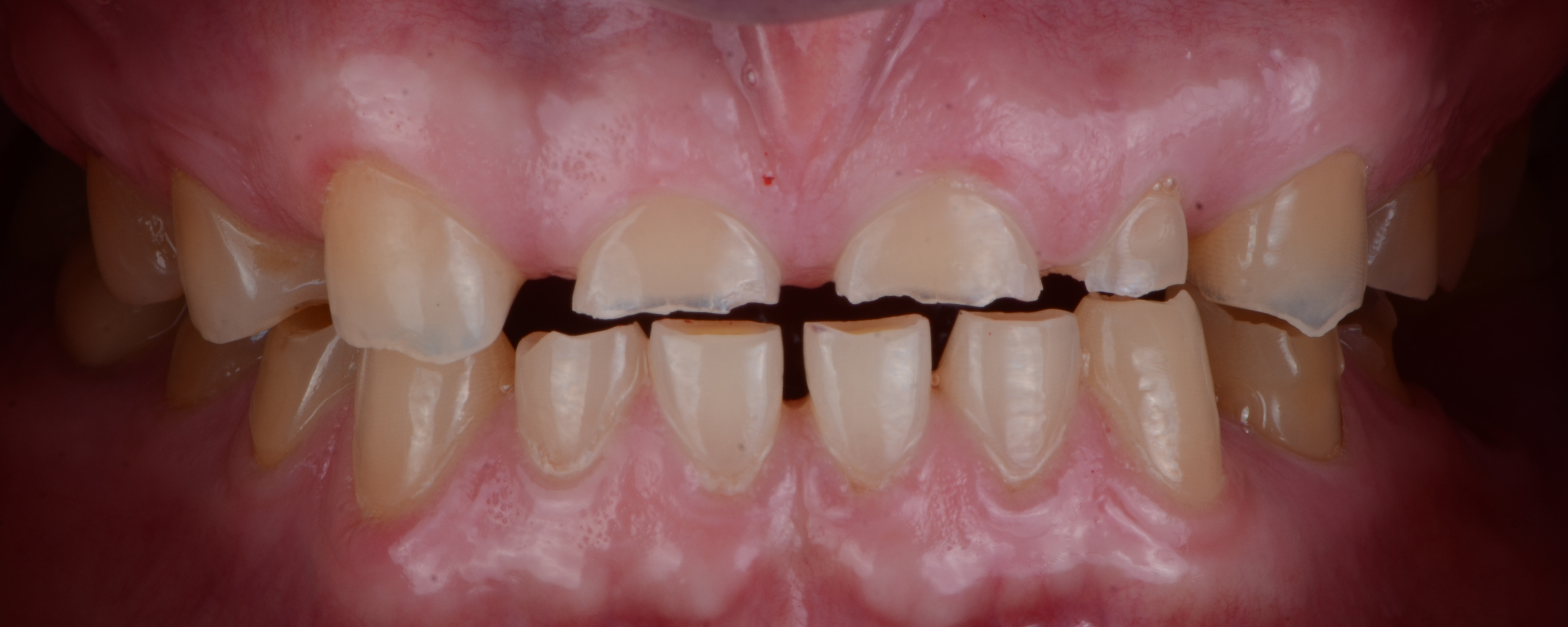
Vertical dimension is the term dentists use for the distance between your upper and lower jaw when your teeth are together. It’s determined by the height of your teeth — particularly the back teeth, which are the structural pillars of the bite.
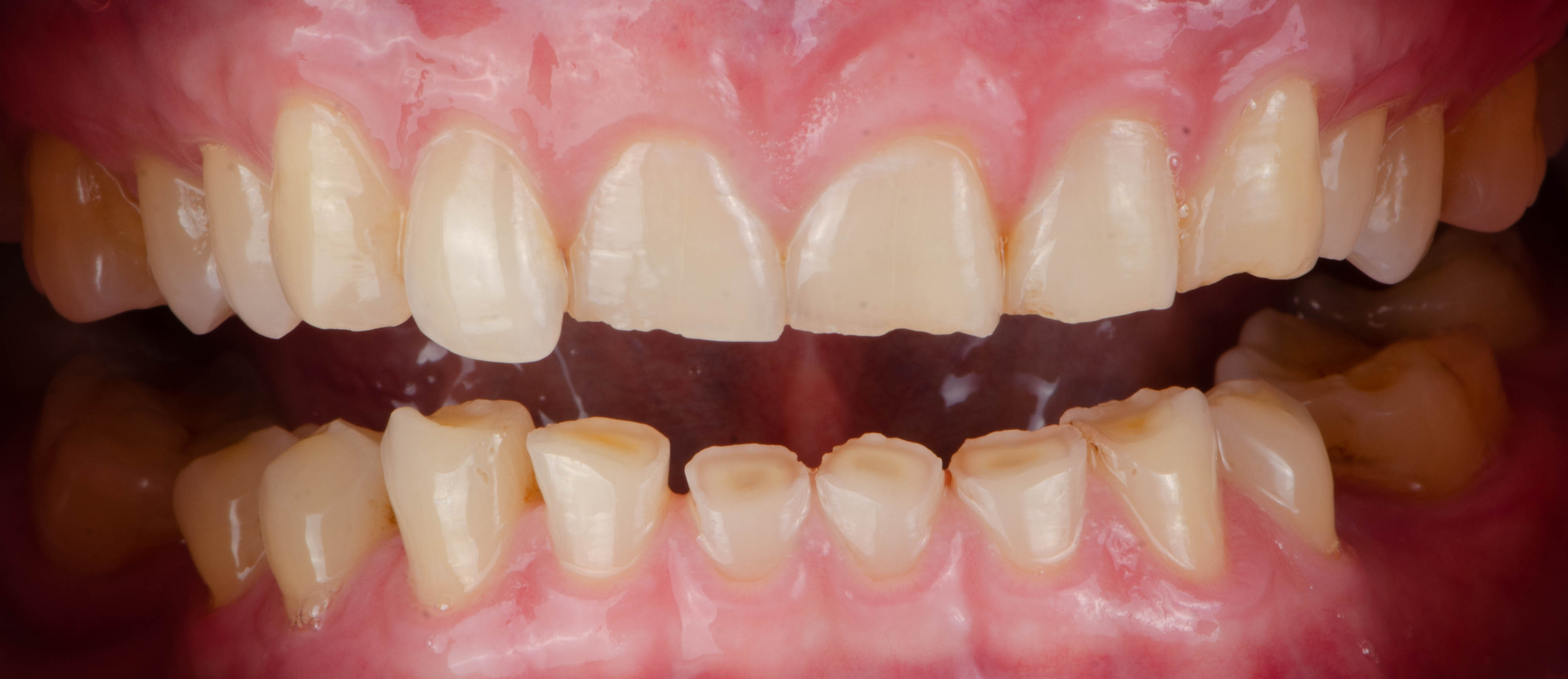
When back teeth are worn down from grinding, lost entirely, or collapsed under failed restorations, the vertical dimension decreases. The lower jaw rotates closer to the upper jaw. And the consequences are both functional and visible:
Facial aging. As the chin moves closer to the nose, the skin between them has less structure to support it. Deep creases form around the mouth. The lips thin and turn inward. The lower face appears compressed and aged — often dramatically older than the patient’s actual age.
TMJ and muscle strain. With reduced vertical dimension, the jaw joint is compressed into a position it wasn’t designed for. The muscles of mastication must work harder and in unnatural patterns, leading to chronic fatigue, headaches, and joint pain.
Accelerated tooth damage. With less vertical space, the remaining teeth contact with steeper angles and greater force, accelerating wear and increasing the risk of fractures.
Compromised nutrition. Patients with severely worn or missing teeth often shift to softer, processed foods because they simply can’t chew properly. This dietary change — especially in older adults — can have significant impacts on overall health.

A full mouth reconstruction isn’t just about making teeth beautiful. It’s about engineering a bite that distributes chewing forces in a way that protects every restoration for years to come.
This is where Dr. Kriston’s decades of experience become essential. He analyzes how your jaw moves — not just how your teeth come together in one position, but how they contact during chewing, grinding side to side, and biting forward. Every movement creates forces, and those forces must be managed:
When these relationships are correct, forces are distributed evenly and efficiently. When they’re wrong, individual teeth bear loads they weren’t designed for — and restorations break, teeth crack, and the reconstruction fails prematurely.
The body tells you when you’ve asked for too much. Restorations break, teeth move or loosen, muscles protest. Form follows function in nature, and in full mouth reconstruction, the beauty of the result depends entirely on the soundness of the functional engineering underneath it.
Before any rebuilding begins, existing infection must be addressed. This means:
Building restorations on infected or unstable teeth is like building a house on a crumbling foundation. Phase 1 creates the clean, healthy base that everything else depends on.

.jpeg)
With infections resolved, Dr. Kriston addresses the structural foundation:
This phase also includes healing time. Bone grafts need months to mature. Implants need time to integrate with the bone. Orthodontic movement takes time. Patience in this phase protects the long-term success of everything that follows.
With the foundation stable and healthy, the restorative work begins:
The provisional restorations are a critical step — whether BioTemps for individual teeth, Snap-On Smile for visualization, or a PMMA prosthesis for implant cases. Patients live with the new bite, the new tooth lengths, and the new facial proportions while Dr. Kriston verifies esthetics, phonetics, occlusal design, and TMJ comfort. Only after everything is confirmed does the final work begin.
.jpeg)

After the reconstruction is complete, Dr. Kriston designs a maintenance and protection plan:
A full mouth reconstruction is a significant investment. Protecting it with proper maintenance ensures it lasts for years — often decades.

Dr. Kriston is transparent about treatment options at every budget level. Consider a patient who has a tooth that could be saved with a root canal and crown, but who is also missing multiple other teeth. The question becomes: should we invest in saving that single tooth, or redirect that money toward a more comprehensive solution — like a denture or an implant-supported prosthesis — that addresses the larger problem?
The answer depends on the patient’s priorities, their overall oral health, and their budget. If money is no object and the priority is the best possible outcome, an implant-supported denture may be the wisest long-term solution. If the budget is limited, a well-planned conventional denture can still dramatically improve function and appearance.
What matters is that all options are presented honestly, with clear explanations of the advantages, limitations, and costs of each. Dr. Kriston doesn’t push patients toward the most expensive option. He lays out the alternatives, explains the trade-offs, and helps patients make the decision that’s right for their life.
The two-stage nature of many treatments (implant placement, then restoration) also naturally divides costs over time, making comprehensive reconstruction more financially manageable than patients often expect.
Full mouth reconstruction isn’t just about teeth. It’s about the person those teeth belong to.
Nutrition. Patients with severely compromised teeth often can’t chew properly. They shift to soft, processed foods and avoid fresh vegetables, nuts, and proteins that require real chewing. Restoring the ability to eat a full, nutritious diet can have profound effects on overall health — especially for older adults.
Confidence and mental health. A mouth that’s broken affects how you feel about yourself. Patients stop smiling, cover their mouths when they laugh, avoid social situations. The psychological burden of a damaged smile is real, and the transformation in confidence after reconstruction is one of the most rewarding outcomes Dr. Kriston witnesses.
Comfort. Chronic TMJ pain, muscle headaches, tooth sensitivity, and the constant awareness that something might break — these daily discomforts erode quality of life in ways that are hard to measure but impossible to ignore. A properly reconstructed bite eliminates them.
What will make this person healthier? What will let them eat well, feel confident, sleep without pain, and smile without hesitation? These are the questions that guide Dr. Kriston’s treatment planning beyond the clinical details.


Full mouth reconstruction often involves multiple types of procedures: extractions, bone grafting, implant restorations, veneers, crowns, bridges, bonding, gum reshaping, orthodontics, and bite therapy. In many dental practices, this means referrals to multiple specialists — an oral surgeon for extractions, a periodontist for gum work, a prosthodontist for restorations — each with their own schedule, their own perspective, and their own treatment plan.
At Michael Kriston DDS, Dr. Kriston performs the majority of these procedures himself. He does the extractions, the bone grafting, the implant restorations, the veneers, the bonding, the gum reshaping, the Invisalign, and the bite therapy. He holds a California oral conscious sedation permit for patients who want a more comfortable experience. And for procedures that require surgical specialists — like complex implant placement — he coordinates closely with trusted partners, always maintaining control of the restorative plan.
The advantage is coordination. When one doctor designs the smile, plans the extractions, decides where the implants should go (based on where the restorations need to be), determines how the bite should function, and sequences every procedure in the right order — the result is a reconstruction built on a single, coherent vision. Not a patchwork of separate specialists’ opinions, but one plan, one doctor, one outcome.
Full mouth reconstruction begins with a consultation where Dr. Kriston sits down with you to discuss the possibilities. He encourages you to bring pictures of smiles that inspire you and photos of your own smile from better days. He enjoys partnering with patients, making suggestions based on decades of experience, and bringing realistic expectations so your smile radiates natural beauty.
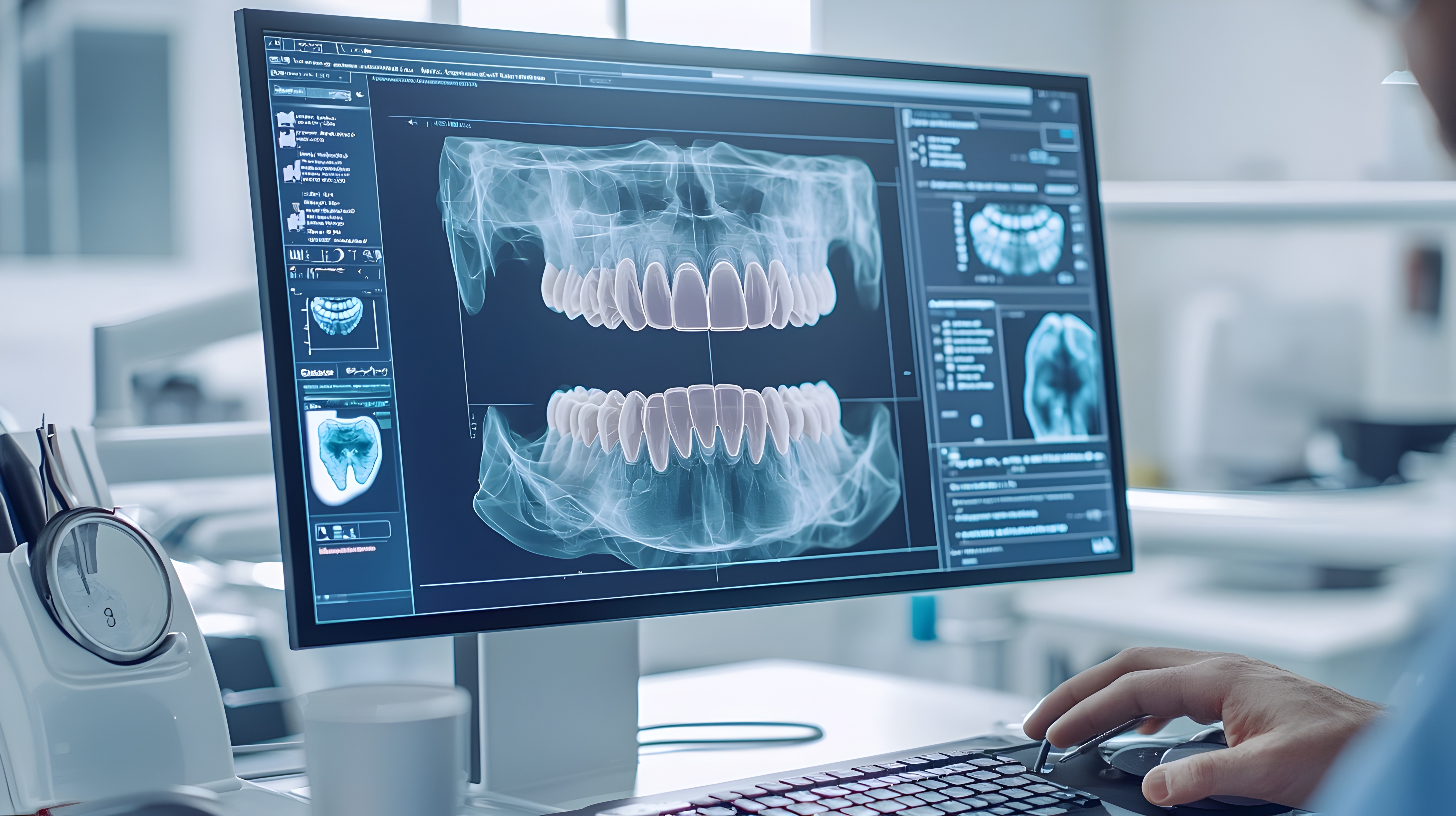
From there, a comprehensive records appointment captures everything needed for planning:
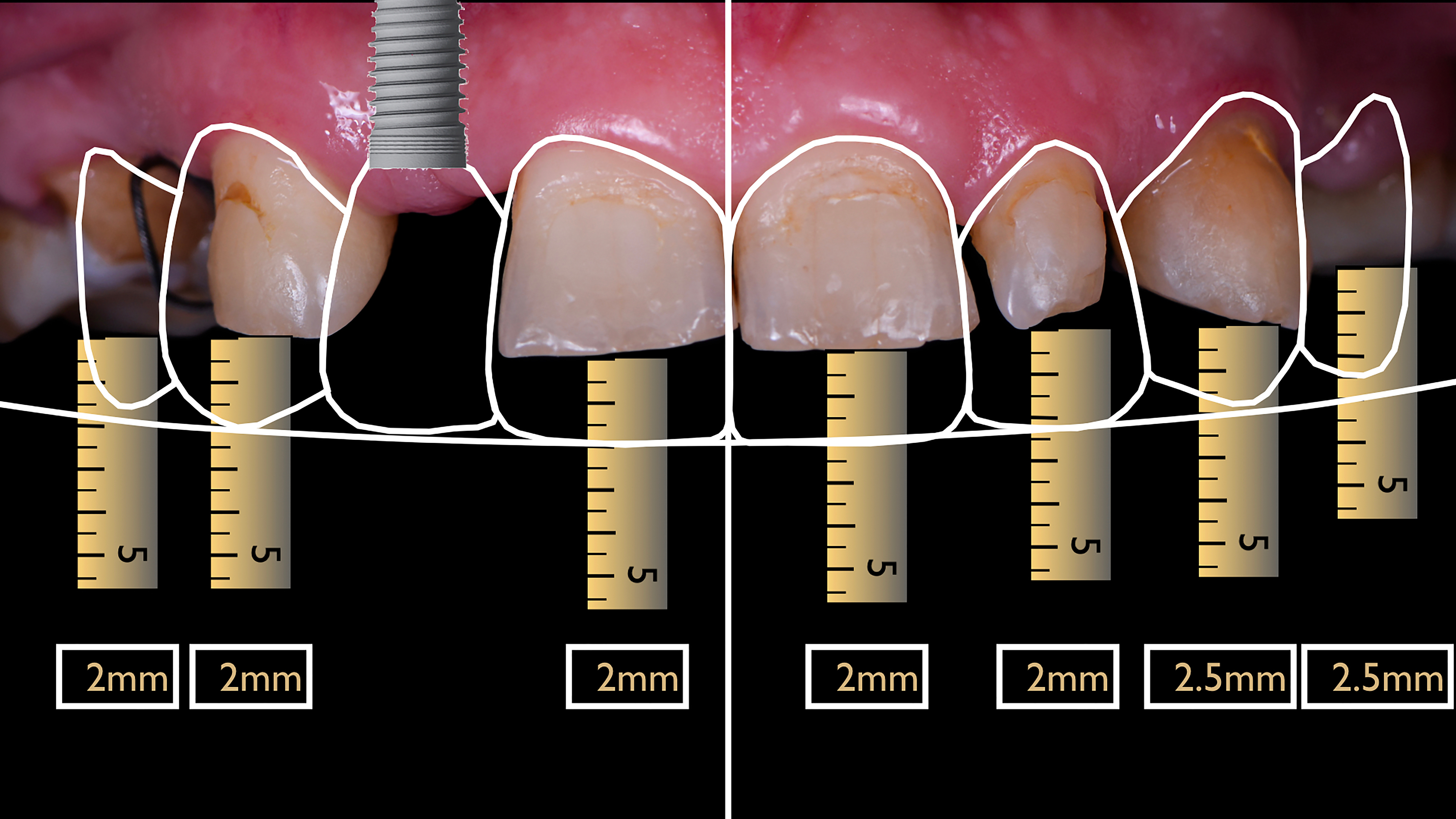
Dr. Kriston evaluates teeth size and facial proportions. Is the smile slanted relative to the eyes? Do the teeth fill the area revealed by the lips? Is the lip posture affected by the bite? Is the vertical dimension collapsed? There’s a long list of questions to answer — and that’s just the smile.
The function of the bite is equally important. The muscles and jaw joint require a size, shape, and fit of teeth unique to you. Creating a comfortable, efficient, and long-lasting result requires balancing form (your smile’s appearance) with function (your bite’s mechanics). That balance is an art, and Dr. Kriston has spent 38 years perfecting it.
.jpeg)
You may benefit from a full mouth reconstruction if:
Full mouth reconstruction is not about age — it’s about the condition of your mouth and your desire for a better result. Dr. Kriston has performed reconstructions for patients in their 30s and patients in their 80s. The common thread is a mouth that has accumulated damage beyond what individual repairs can address, and a patient who is ready for a comprehensive solution.
.jpeg)