Restorative-Driven Implant Planning — Our Approach
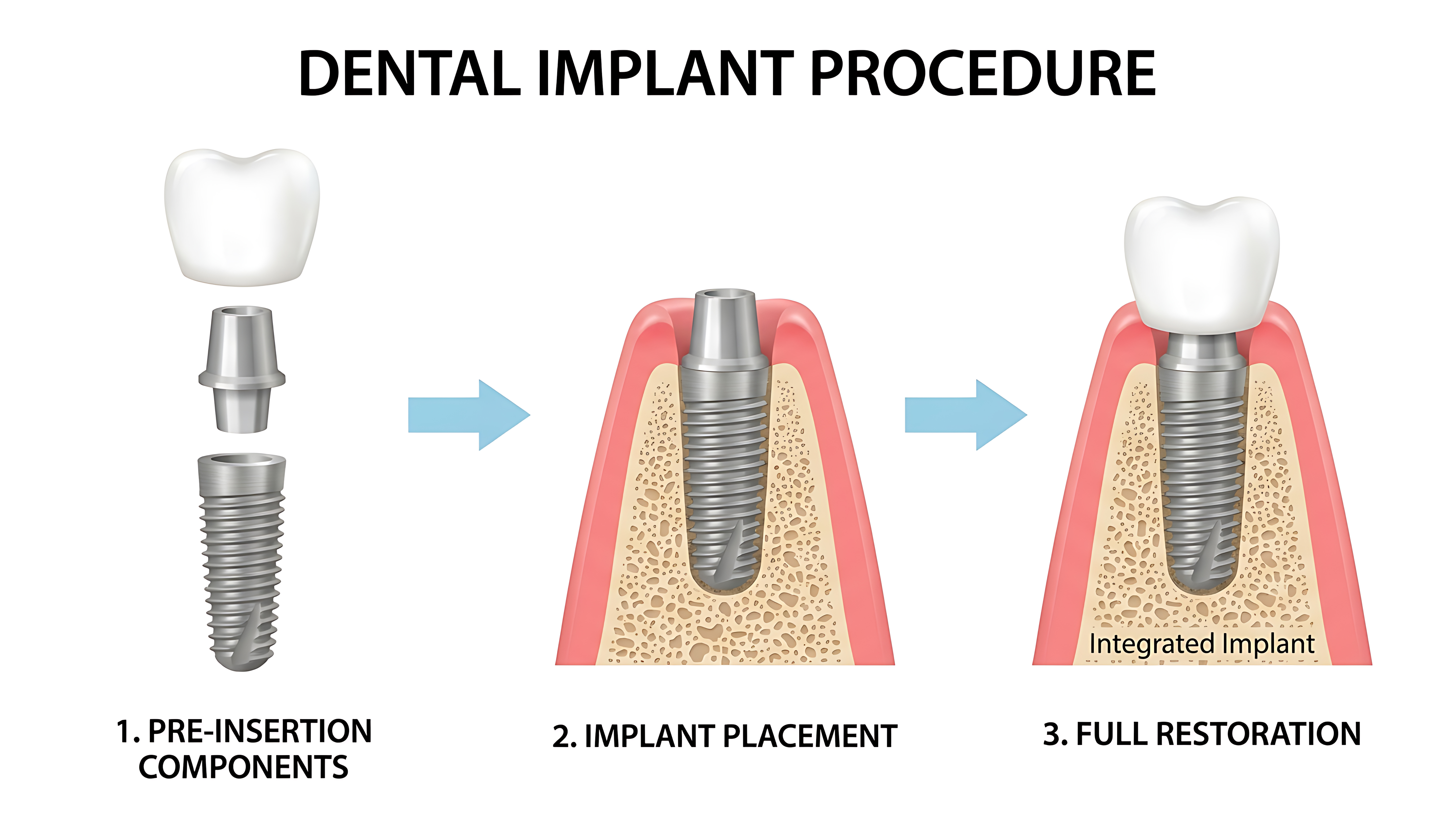
Here’s something most patients don’t realize: the long-term success and appearance of a dental implant depends as much on where it’s positioned as on the surgery itself. An implant placed even a millimeter off can lead to a restoration that looks unnatural, traps food, or doesn’t align properly with your bite.
That’s why at Michael Kriston DDS, we plan every implant case from the restoration backward. The process works like this:
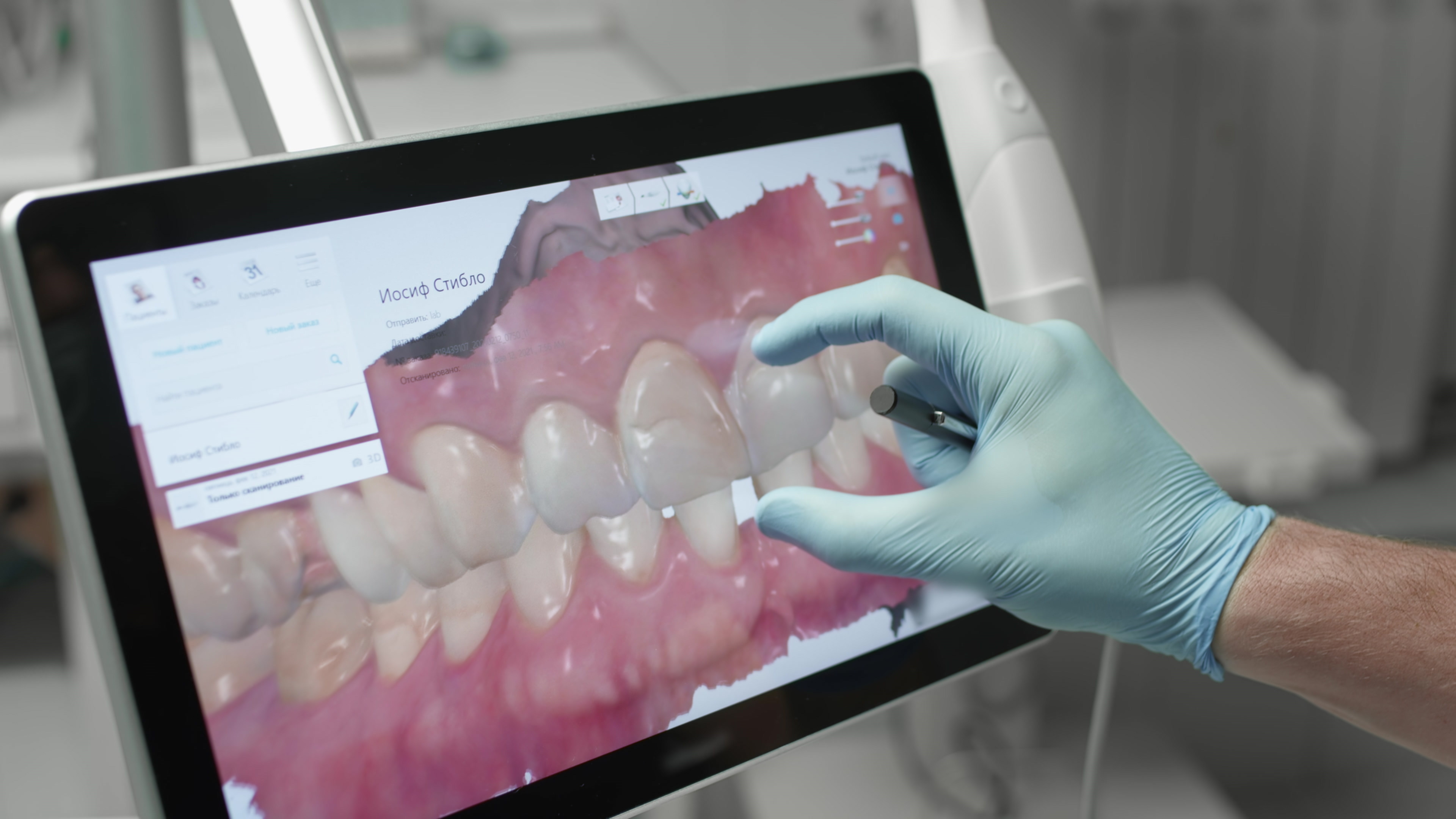
First, Dr. Kriston uses our Medit intraoral scanner to create a precise 3D digital model of your mouth and designs your ideal restoration — the crown, bridge, or prosthesis you’ll actually live with. This is the target: the perfect final result.
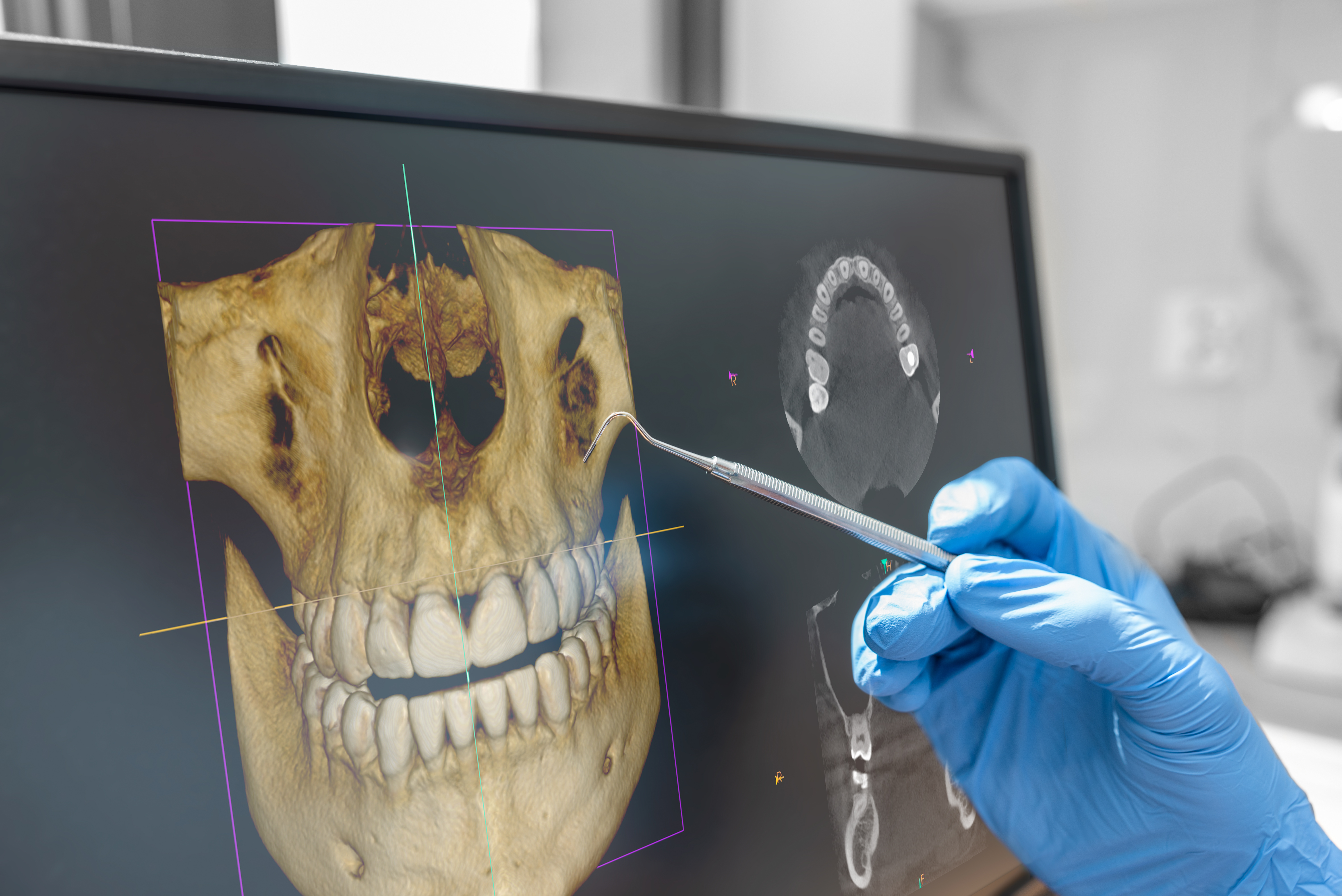
Next, that restoration design is overlaid onto your Carestream 3D CBCT scan, which shows the bone, nerves, sinuses, and surrounding anatomy in three dimensions. Dr. Kriston uses this combined data to determine the exact position, angle, and depth the implant needs to be placed to support that ideal restoration.
The result is a surgical plan where every decision is guided by the end goal: a restoration that looks natural, functions perfectly, and lasts. This plan is often translated into a computer-designed surgical guide that ensures the implant is placed with pinpoint accuracy.
This is what restorative-driven implant treatment planning means in practice. It’s the difference between placing an implant where the bone is convenient and placing it where the restoration demands.








.jpeg)
.jpeg)